



When you weigh up snorkelling vs scuba diving in Hurghada, start with how you want to experience the Red Sea. Choose snorkelling if you feel comfortable at the surface and want to watch the reef from above. If breathing underwater is the part you’re curious about, a supervised trial dive gives you a chance to try it. We’ll compare the time, equipment and swimming confidence each option calls for, with ways to plan a day for friends or family who want different experiences.
Snorkelling and scuba diving at a glance
Snorkelling lets you watch the reef from the surface. A supervised trial dive lets you breathe underwater with scuba gear. Choose a certification course if you want to keep diving after your trip.
With a snorkel, you look down through your mask and breathe through a tube that reaches above the water. Your fins help you move along the surface. How clearly you see the reef depends on the depth and visibility at the site. If the coral is close to the surface and the water is clear, the view can be the highlight of the trip.
With scuba, a regulator delivers breathing gas from a cylinder. You can look across a reef while submerged, within the limits of the session and the site. A trial dive has an instructor guiding the experience. A course gives you time to practise the skills you’ll need on future dives.
Use the comparison below to decide what kind of booking makes sense for you.
| What matters | Snorkelling | Supervised trial dive | Certification course |
|---|---|---|---|
| Where you are | At the surface, looking down | Underwater with an instructor | In confined water and open water during training |
| Main equipment | Mask, snorkel and fins, with a fitted life jacket on a guided outing | Mask, fins, cylinder, regulator and buoyancy equipment | Scuba kit you learn to use across several sessions |
| Water confidence | Comfortable floating and moving at the surface in the day’s conditions | Comfortable in water and able to practise under supervision | Able to complete the course’s swim and float assessment |
| Time to allow | The full excursion, including boat travel and any island stop | The day for Blue Reef’s trial, including briefing and practice | Several days for theory, skills and dives |
| What you take away | Time viewing the reef from the surface | First experience of breathing underwater with scuba equipment | A qualification once you meet the course requirements |
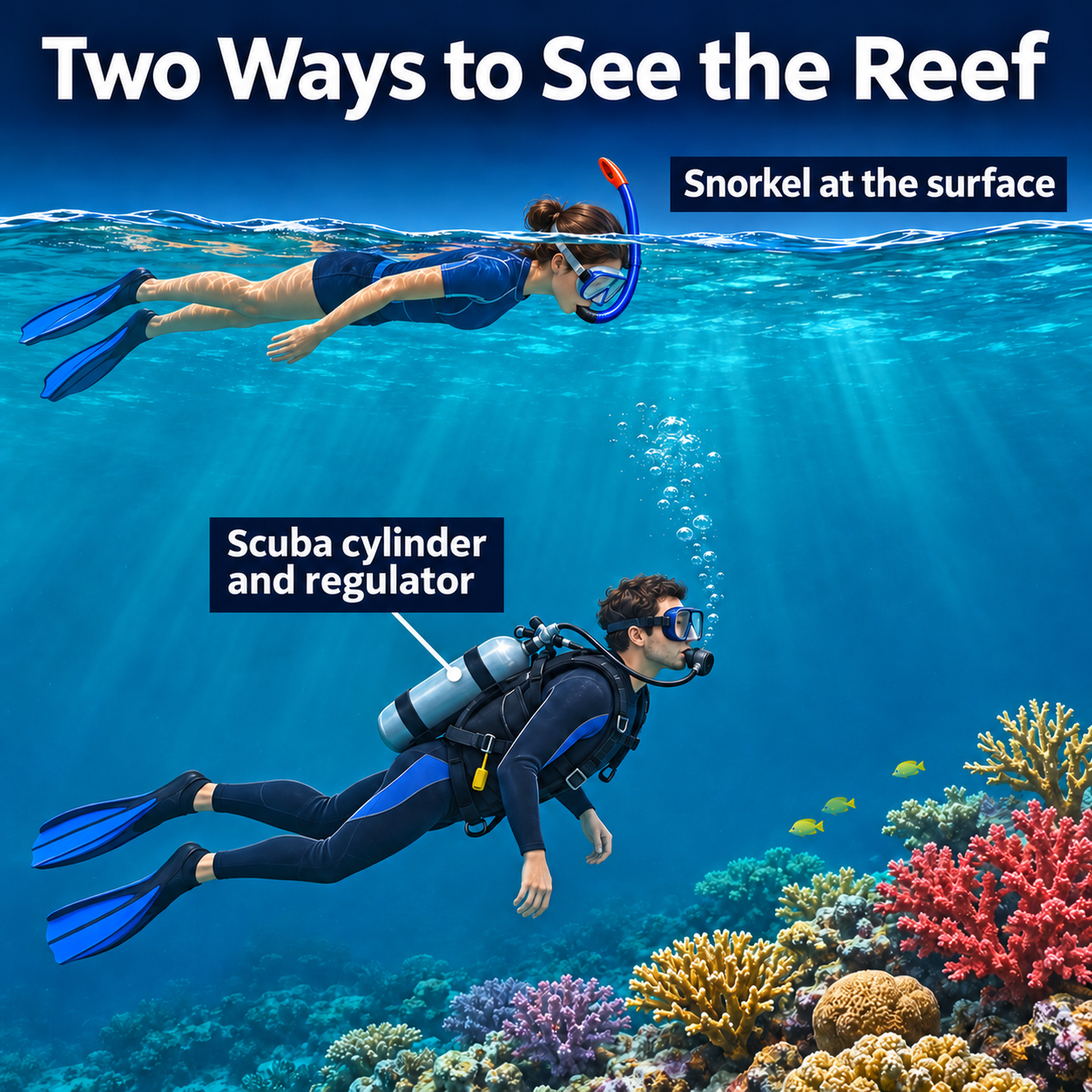
If your group has one free day, start with what each person actually wants from the water. Someone who wants to watch fish from above may get everything they came for on a snorkel outing. If your main aim is to take your first breaths underwater, set aside time for the briefing and practice that come with a trial dive.
When snorkelling fits your Hurghada trip
Choose snorkelling if you are comfortable in the sea and want to see the reef from above. Ask about the guide, water entry and life jacket before choosing a trip.
On a guided outing, the entry point and route shape the experience as much as the reef itself. A stretch of clear, calm water gives you time to get comfortable with the mask and look around. Chop or current can make the same outing feel more tiring. If you want a gentle first experience, tell the operator before booking and ask how the route is chosen for the group and the conditions.
The Orange Bay excursion is an example of an outing that combines an island visit in the Giftun area with guided snorkelling. The island stop gives the day a different rhythm from an outing centred on time in the water. If everyone in your group wants reef time, ask how the day divides between travelling, snorkelling and time ashore. Our marine excursions are the place to compare the outing formats.
Ask what the booking includes and whether the operator supplies equipment in your size. A well-fitting mask matters if you’re unfamiliar with looking down while breathing through a snorkel. If the mask leaks or the mouthpiece feels awkward, ask for help with the fit while you’re still aboard. Check how guests get back out of the water as well. A boat ladder can affect your choice if someone in the group has limited mobility or gets tired easily.
If you’re travelling with children, ask the operator whether the outing suits each child’s age and swimming ability. Get a clear answer about supervision, child-size equipment and what happens when someone wants to leave the water early. An island stop and the snorkelling site can have different access and water conditions.
Before comparing two excursion prices, check what each one buys you. Ask whether the quote covers equipment, transfers, island access and a place for anyone who stays aboard. If your hotel is outside central Hurghada, give the operator its name before relying on a pickup estimate. A longer outing can be a good fit for a group that wants time ashore. For someone who mainly wants to snorkel, the planned time at the reef is a better comparison.
At the reef, follow the guide’s briefing and use the designated place to enter and leave the water. The CDWS guidance for snorkelling briefings covers life jackets and how to keep clear of coral. Leave room between your fins and the reef, and give marine life space to pass. If you need a break, tell the guide and rest away from the coral.
What to expect on a supervised trial dive
Choose a supervised trial dive if you want to find out how breathing underwater feels. You learn basic skills with an instructor, and the session gives you experience without awarding a certification.
Before you enter the water, the instructor briefs you on the equipment and how you’ll communicate underwater. You practise in a pool or in calm water with pool-like conditions. The PADI Discover Scuba Diving programme includes an optional open-water dive after the initial practice. Ask Blue Reef how the session is arranged for the departure you’re considering and how the instructor decides when participants are ready to move on.
The gear is part of what makes the experience feel different. The cylinder holds your breathing gas and the regulator delivers it through a mouthpiece. A buoyancy control device is an inflatable vest that helps manage how you float. You’ll also wear a mask and fins. The instructor helps you get familiar with the kit and explains what you’ll be asked to do before you leave the surface.
Blue Reef’s one-day Discover Scuba Diving experience includes an instructor and scuba equipment. It’s the route we recommend if you’re curious about a first dive and have one day for the experience. Use our try scuba diving page to see the booking option. If you’re coming with friends, make sure each person knows whether they are booking a trial, another activity or a place aboard.
Allow for the whole day when you plan the rest of your holiday. Ask for the pickup and return window, and ask how the briefing and practice fit around any boat travel. For example, a traveller who has a dinner reservation can check the expected return before setting a time. Someone with a flight soon afterwards should share the flight time before reserving the slot.
Tell the instructor early if you’re uneasy about the mask, the mouthpiece or being submerged. Ask how you’ll communicate if you want to pause. For someone unsure how scuba will feel, the pace of the practice is a more useful question than how deep the session might go.
If you’re comparing a trial dive with a snorkelling excursion, ask which equipment you’ll be fitted for and when that happens. Knowing there’s time to try on a wetsuit, mask and fins can help you plan the morning. Tell the team about any previous fit problems, especially if you wear prescription glasses or find some masks uncomfortable around the nose.
When to take a certification course
Choose a certification course if you want to keep diving after Hurghada. Open Water training includes theory, practical skills and a water assessment, so budget several days for the course.
Open Water training brings together knowledge development, practice in confined water and dives in open water. The course gives you time to build and demonstrate practical skills with an instructor. The water assessment includes swimming and floating or treading water. If you’re unsure about the assessment, discuss your swimming confidence with the dive centre before choosing dates.
A course makes sense if you’re already keen to pursue diving and want to allow time for the work involved. Think about how many days you can set aside and how much time you have before your flight. You can ask about doing the theory before the holiday and how the centre schedules water sessions around the conditions. If you have two free mornings between other plans, check the full timetable before you count those mornings as course time.
You can go straight to an entry-level certification course if you meet the requirements. If your main question is how breathing underwater feels, a supervised trial is a shorter commitment. If you’ve already made up your mind about diving, browse diving courses and ask which course fits your goals and the time you have. Confirm the requirements with Blue Reef, particularly if you’re booking for a younger traveller.
Already certified? Bring your certification details and tell the team when you last dived and what sort of conditions you’re used to. A diver fresh from a course and a diver returning after a long break may have different needs, even with the same qualification. Our guided diving for certified divers gives you a route to the available packages. If your companions want a trial or a snorkelling outing, check how their dates line up with the guided dives you’re considering.
Swimming confidence and conditions on the day
If you are new to open water
Water confidence is about what you can comfortably do in the setting you’ll be visiting. Swimming lengths in a pool may feel familiar. Putting your face into seawater while breathing through a snorkel can feel quite different. Think about how you’d feel floating with your face down, following a guide and getting back to the boat. If any part worries you, tell the guide before entering the water.
If you swim but feel nervous in the sea, explain what makes you nervous. Perhaps you can float comfortably but dislike waves splashing over your mask. Ask how exposed the site is, where you can practise with the equipment and how the guide adapts the outing to conditions. Visibility matters for seeing the reef. Waves and current matter for how much effort you’ll need to spend staying with the group and returning to the exit.
If you can’t swim or aren’t comfortable floating, speak to the operator before you book an open-water activity. A life jacket provides flotation. Comfort in the water, the conditions and the level of supervision still matter. Ask about a controlled practice setting or a way to enjoy the outing from dry land or the boat. For a trial dive, tell the dive centre what you can comfortably do at the surface and let the instructor assess the setting with you.
What to ask about the boat and water entry
Ask where you’ll enter the water, who will guide or supervise you, and how you’ll get out if you want to stop early. If there’s a ladder, ask how guests get back aboard and what help is available. Confirm that the operator has a properly fitted life jacket for each snorkeller, especially for a child or someone who rarely swims.
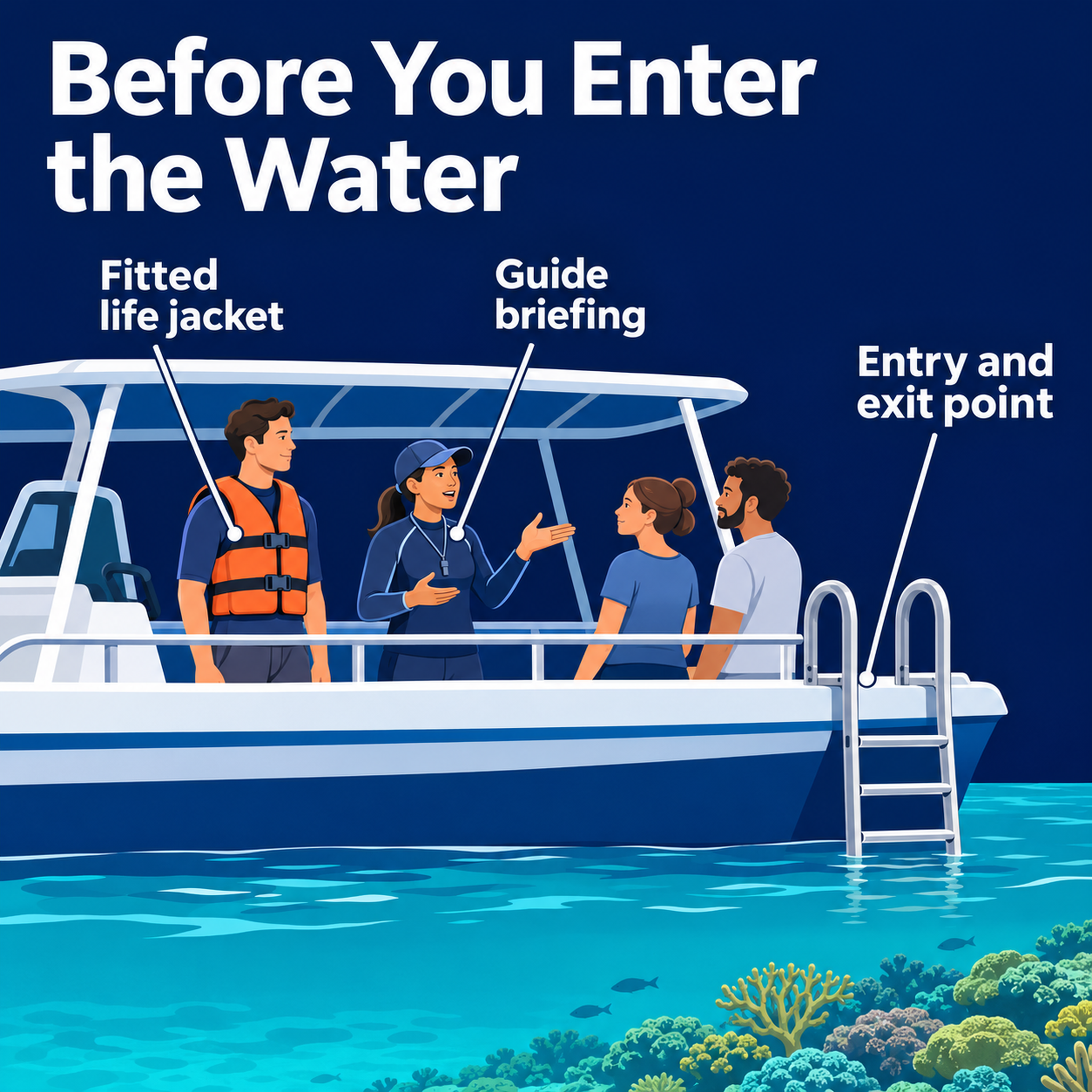
If your group includes someone with a mobility concern, describe the practical issue when you enquire. For example, someone who can manage pool steps may need more information about a boat ladder that moves with the swell. Ask whether the guest can stay aboard during the water stop or join an alternative part of the outing. Check the actual arrangement for the selected boat.
For trial scuba, ask for the medical screening form before the trip so you have time to read and complete it. Some answers require a qualified clinician’s clearance before you dive. Send eligibility questions to the dive centre early, and seek the appropriate clinical advice if the screening calls for it.
Planning a Red Sea day for a mixed group
Agree on what everyone would enjoy before choosing a boat. If one guest wants to snorkel and another prefers to stay dry, ask whether the excursion takes observers and what they can do during the water stops. An island-and-snorkelling outing may suit a group that also wants time ashore. Confirm whether the shore stop is available to everyone and how guests move between the boat and the island.
Think about how each outing will feel for the person doing the least water time. A couple might both enjoy the boat ride while only one person wants to enter the sea. The guest who wants to stay aboard can ask about shade, seating and the time they’ll spend on the boat. Those details can matter more to that guest than the number of snorkel stops.
If a certified diver and a first-time diver want to go out together, describe both activities when you enquire. A guided dive for a certified guest and a supervised trial for a beginner have different briefings, supervision and site needs. Add any snorkellers or observers to the enquiry. Ask which people can join the selected departure and which activities will run on that boat. If the operator offers the options at different times or sites, you can book separate outings and keep the rest of the day together.
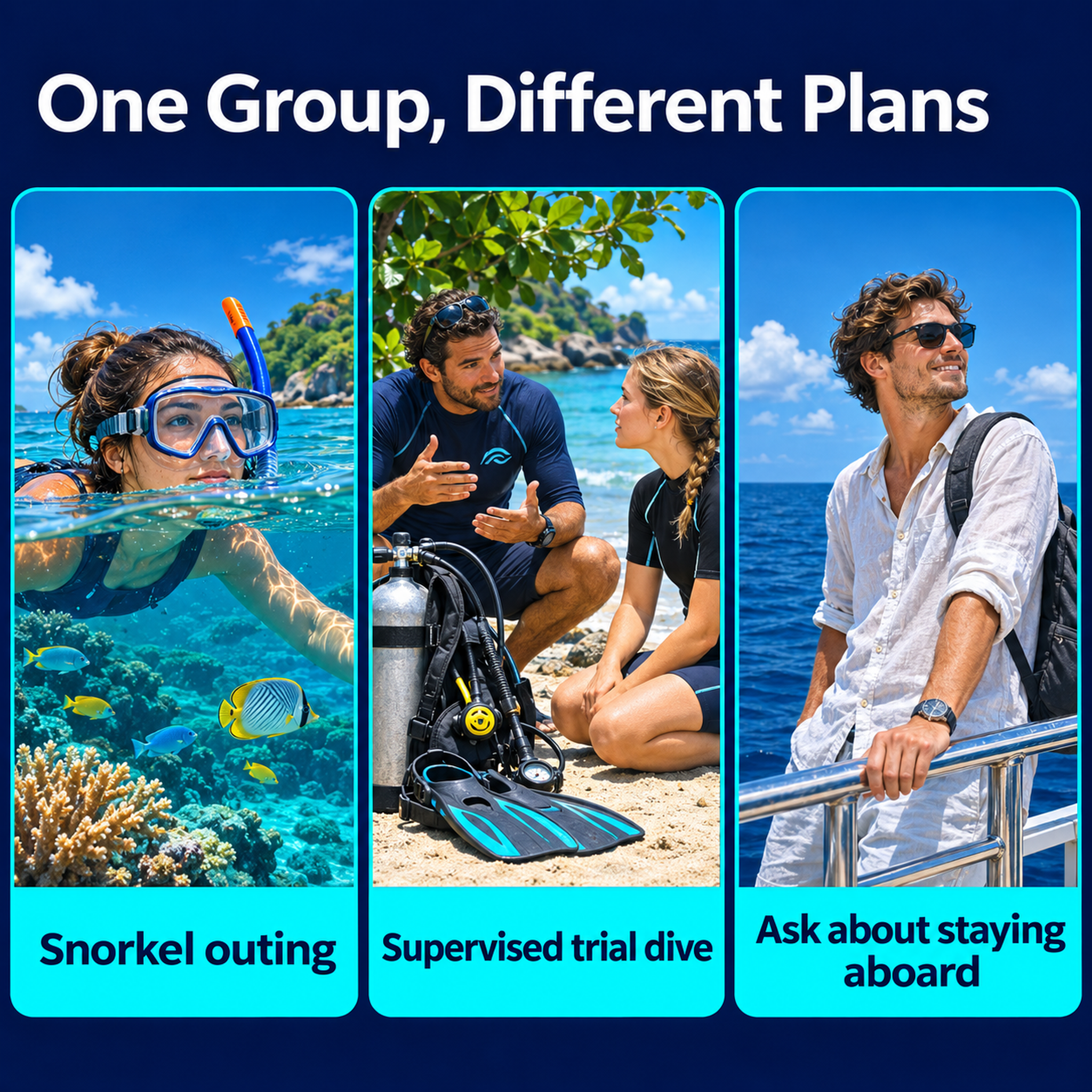
Compare time in the water with the total time away from your hotel. A boat trip may include transfers, time travelling to the site, a briefing and breaks between activities. Ask for the pickup and return window and the expected time at each stop. If you’re deciding between a water outing and an afternoon engagement, work from the expected return. If you’re comparing a snorkel outing with the first day of a course, ask when you’ll have time free after the session.
If you’re in Hurghada for a few days, leave room in your itinerary for a change in conditions. Ask what happens if the planned site is unsuitable and whether the operator usually changes the site or offers another departure. A group with one available morning needs a different backup plan from a group that can move its outing to the next day.
Start planning from your flight time if you’re considering scuba near the end of your stay. Diving requires an interval before flying, and the appropriate interval depends on the diving you do. Give the dive centre your departure time and planned dives before booking. A separate day for a snorkel outing or an island visit gives your group another option for the end of the trip.
Choose the experience that fits the time and water confidence you have. For a group with different plans, ask us about options for your group before booking. Share your dates, participant ages and swimming confidence. Tell us who wants to snorkel, try scuba, dive with an existing qualification or stay aboard. We can discuss which departures fit those plans.
Frequently asked questions
Do you need a scuba certificate for a first trial dive?
You can join a supervised Discover Scuba Diving experience without holding a scuba certificate if you meet the participation requirements. If you’re looking at an ordinary recreational boat dive, check the booking category. Blue Reef’s guided recreational dive packages require recognised scuba certification.
Can you snorkel in Hurghada if you are a weak swimmer?
Speak to the operator about the site, supervision and whether a suitable life jacket is available. Describe how far you can swim and whether you’re comfortable floating in the sea. If you feel uneasy even with support, ask about staying dry.
Can one person snorkel while another tries scuba?
Ask the operator whether both activities run on the same departure. Give the operator the exact activity each person wants, including anyone who will stay aboard. If the operator can only confirm one activity on that boat, arrange separate outings.
Do you need to buy your own equipment?
Blue Reef supplies scuba equipment for Discover Scuba Diving. For snorkelling, check what your chosen excursion includes and ask about sizes for masks, fins and life jackets. Allow time to check fit before you get into the water.
Is one day enough to try scuba diving in Hurghada?
Yes. Blue Reef offers a one-day Discover Scuba Diving experience. Check the total time for transfers, briefing, practice and any boat travel before making other plans. If you want to earn an Open Water certification, allow several days.

Leave a comment